Monday, April 10, 2017

Middle Level Peer Mentoring Programs


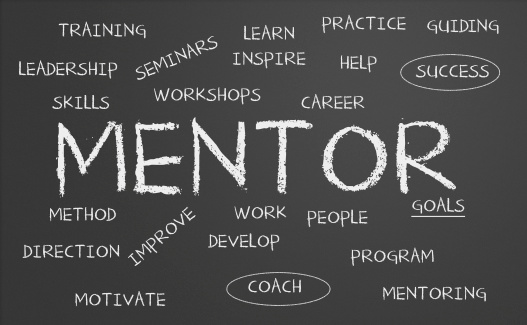
Middle level students are at a very unique stage of their development, where having support both academically and emotionally are of the utmost importance. Given that the transition from an elementary school to a middle school can be so difficult, as there is so much changing in a young adolescent’s life, it is essential for students to have mentors. Adults can show excellent mentoring through advisory in the middle level, but students require attention from more than just adults. During this time in their development, middle grade students have many uncertainties, and one of the most prevalent things they think about is seeking approval from peers. Middle level students struggle with big transitions, have many uncertainties, are seeking a sense of belongingness and have the need to feel connectedness to school, self, and others. “Connectedness occurs when a person is actively involved with another person, object, group or environment” (Hagerty, 1993). Peer mentoring allows students to connect with one another in positive way, which is why I believe that mentoring programs should be necessary in every middle school.
As a sixth grade student about to leave an elementary school I knew and loved to enter a much larger middle school, I was very uncertain about how I would feel at the new school. Toward the end of the school year I received a letter in the mail from a seventh grade student at the middle school I was about to attend. She introduced herself, talked about her hobbies and interests, what she was most nervous about for middle school and how she dealt with it, what she liked about middle school, how the teachers and classes were, and how she was excited to meet me. I was so happy to read that somebody in this big new school I was about to attend was excited to meet me, and since she reached out to me I wasn’t afraid to approach older students. Receiving this letter shifted my feelings entirely, and instead of feeling nervous about middle school I started to feel excited for my middle school experience. Just by having one older student reach out to me and show support made a huge different for me, so this is why I am intrigued in peer mentoring programs in the middle level. I want for all students to experience the support I felt through that one letter, but on a more regular basis.
Image result for mentoring students

During Middle Grades Organization this semester we had guest speakers who teach at local middle schools talk to our class about a peer mentoring program in their 6-8 middle schools, where 6th and 7th grade students are paired with 7th or 8th grade students. This helps to build a community where students connect with people who are not just in their grade, getting them to mingle with students that are younger and older than them. It also helps students to have a comfortable transition into middle school, by getting to know another student individually and hear about their experience in middle school so far. The guest speakers said the strongest factor that motivates older students to be a great mentor to incoming students, is that they had an enjoyable experience when they were incoming students and had an awesome older mentor. Thus, once this cycle is established it makes for very positive peer mentoring experiences.
Through my research I have found many programs where middle level students have been excited to partake in mentoring programs with those at other ages. At a school in the Thames Valley District in Ontario, students in 7th and 8th grade were given the option to become mentors for local elementary school students in 2nd and 3rd grade. Though this is not a peer mentoring program specifically within a middle school, it showed the way middle level students were motivated to be part of a mentoring experience. Students were given the opportunity to become role models for younger students to look up to. This is not mandatory for students to partake in, but rather they could choose if they were interested in volunteering their time to mentoring local children. Some factors within this study that made the program successful were the length of the student’s involvement, mentor training, frequency of contact to mentors, proper mentor matching, and structured activities for mentor pairs to partake in.  Questionnaires were distributed to participants in the mentoring program, providing us with information on the experience. Though the pretest showed that students were excited yet nervous for the mentoring experience, the post test showed that both mentors and mentees greatly benefited from the program. Post test results showed that both the older and younger students had a positive experience interacting and playing with their mentor/mentee, as well as many skills being built. Students said they noticed a difference in their communication, social skills, self-esteem, and some even stated that their behaviors have significantly changed. One mentee said the experience made them more easy going, and another mentee said that they have stayed out of trouble during the program. Of the middle level students who served as mentors, about 70% of them felt a stronger sense of connectedness to the school, however there was a slight decrease in a feeling of connectedness for the mentees in 2nd and 3rd grade. I think there would be an increase in connectedness if the age gap wasn’t so significant, and because the mentors and mentees attended different schools there is no improvement of connectedness within one school. This school’s student mentoring program found that it was most helpful to students who had instability in their home situations, as this mentoring resulted in students having a sense of belonging and students feeling safe and comfortable at school. Questionnaires showed that 86% of students, (both mentors and mentees) involved in this program enjoyed their peer mentoring experience. This study shows that middle level students show interest and can greatly benefit in student mentoring programs.

Another mentoring experience I read about introduces the successes within a middle level peer mentoring program at Mill Creek Middle School in Michigan. Sixth grade students that were new to this middle school break into groups of 6-8 people, calling them “families” in which an eighth grade student is assigned to. The eighth grader is to help guide them in what to expect, how to be successful academically, and are there for emotional support. The “family” groups meet up on the first day of school to help sixth grade students transition into middle school, then after that they meet up once a month and whenever support is needed. This program is not run by teachers, but rather run by students, as the administration recognized that students can be trained to help one another succeed socially and academically. The fascinating thing about this school’s program is that eighth grade students present the rules and expectations to new students, which then holds the eighth grade students to showing new students what it looks like to follow the rules that they spent so much time informing the new grade students about. This is a great opportunity for eighth grade students to work on their speaking and presenting skills, leadership skills, build new connections, and more. This program is so successful that when an issue arises in the school, the teachers can rely on the students to take care of it by speaking with their family mentoring groups.

Benefits of peer mentoring are seen clearly from a teacher’s standpoint as well, with a focus on how it affects students during transitions from elementary to middle schools. Another article I found discusses a school in Ireland where the benefits of peer mentoring programs included effective communication, availability of social and emotional support, and awareness of the difficulty of transitioning from primary to secondary schools. Students go from a small, personalized, community oriented school to a bigger, more complex, and more impersonal environment, which can give students anxiety in many ways. During this time, students also are facing challenges academically and socially, they may have personal/family issues, and the pressure that students are under in the beginning of secondary school often determines their interest and the duration of their education. The goal of the peer mentoring program in this article is to allow students to feel connectedness to their school, ease the process of the transition, and to show that it is necessary for schools to pay attention to student wellness, especially during such transitions.
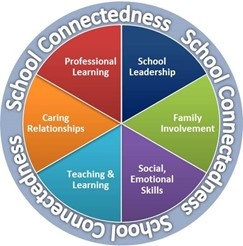
For a school looking to start mentoring programs, there are several resources to help guide them. First, there is SkillsUSA which provides a guide of how to start a student mentoring program within a school for high school or college, though they can be applied to middle level, too. It outlines the importance of mentoring programs and the benefits that arise from it as well as promoting overlying themes of SkillsUSA. SkillsUSA is a nonprofit organization that recognizes that our current students are our country’s future leaders, workers, producers, entrepreneurs, and more and they work toward building a strong future for our country by building students’ skills. The benefits this website mentions are a rise in self-esteem, academic success, supplying support to students, reducing student drop outs, and more. Students being involved in a mentoring program is greatly beneficial to the students themselves, the social climate, cooperation within the classroom, and making a middle level team feel more like a strongly connected community. Any involvement at all is good for students, as “involvement promotes a sense of comfort, well-being, and anxiety reduction” (Hagerty, 1993) among students, but mentoring can help students to build many skills while growing close to one another.
From this guide, schools can understand how to start up a mentoring program, however proper training is required for successful programs. The Boomerang Project is one company that goes into schools to present on student leadership, service learning, character development, bullying prevention, peer to peer mentoring, and middle level transitions. The company recognizes that transitioning into middle school is a very important time for students, and there are not many programs available to help students with this time. The Boomerang Project emphasizes the importance of students feeling safe and connected, as well as being informed during this middle level transition. Also available on their site are links to the company’s webinars, brochures, anti-bullying information, statistics on student success before and after their programming, blog posts about how to achieve student success, and more. This is a great resources for teachers and administration, as it can help introduce effective middle level transition and student to student mentoring programs.

There are several important components to mentoring programs that teachers and administrators must consider when implementing peer mentoring into their school. In order for this kind of program to be successful, it takes a strong relationship and trust between the educator and students involved. Developing classroom norms that help to create a tight knit community among students and makes the learning space conducive to student support is essential for students to feel as though they both give and receive respect and empathy.


Individual student benefits of a successful mentoring program can include:
  • Developing a feeling of belongingness at school
  • Students staying out of trouble
  • Significant support during such a huge transition
  • A rise in academic success
  • Fulfillment from one-on-one time with an adult


Benefits of peer mentoring programs are seen among the community around students as well, such as:
  • Community atmosphere on the middle level team
  • Cooperation and communication within classroom
  • A sense of connectedness among students and teachers


Some proper ways to prepare for a successful peer mentoring program in your school:
  • A thorough training program for both teachers and student mentors
  • Knowing your resources (such as SkillsUSA and The Boomerang Project) and accessing information from them as needed
  • Coming to an agreement with students on the purpose of implementing such programs and provide them with clear expectations of the experience

For more information on this topic and additional resources see the link here.

Tuesday, March 7, 2017

Middle Level Family Involvement


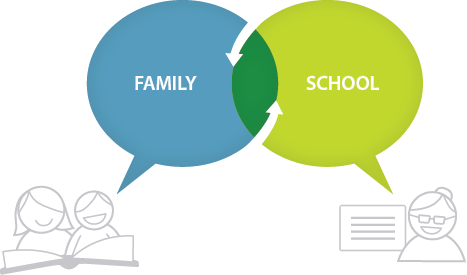
In our studies of best middle level practices, we found that a commonly overseen component of student success is family involvement. It is essential to help support students at this stage of development through communication with parents, parent volunteering, and parent involvement in the decision making process.
Communication with families strongly correlates with student success. This is visible through regular parent-teacher conferences, student work and progress being sent home to parents, notices on policies and changes, school newsletters, and more. This communication is essential in order for students to be aware of their own progress and success, as well as keeping students and parents informed about policies and course offerings. Parents are able to monitor their students’ success, understand school policies, and to address any students’ issues with the teachers through this open communication. In order for this to happen, teachers must work diligently to ensure effective communicate with parents to relay any pertinent information.
The volunteering aspect is an important way to show families that they are able to become involved in their student’s school experience. This can be shown through joining a Parent-Teacher Association (PTA), helping in the classroom, and attending and/or organizing events to help support the school. Through this, parents are able to be around their child’s teachers more often and understand teachers’ job responsibilities and know that they are welcome in the school building. Students will have opportunities to practice the skill of effective communication with adults as parent involvement becomes more integrated. Teachers will also be able to rely on parents to help support them in what they do. Overall, parents involvement in the school, in whatever they are able to help, will aid in creating a positive environment for all involved.
Involving families in the decision making process is a significant way for parents to become  involved in regulating the regional education policies that directly affect their children. Students are able to see that they not only have rights, but their rights are supported by the adults in their community. Families are able to be aware of policies and decisions that are made in school districts and give their input to help improve policies surrounding their child’s education. Teachers are able to understand parents’ perspectives on their child’s learning, which in turn, allows teachers to better adjust their teaching styles and classroom practices to meet the needs of the students.
In my experience, students have a hard time separating school from home when there are significant issues in their life at home. Students do not behave or perform at their best when they are facing instability in their homes, so an effective method of communication with parents is key to understanding how to best support the needs of students at any given time. Often teacher to parent conversations also help to solidify the importance of education in the student’s lives. The more parents are involved in their child’s education, the more they will see it necessary to support the student’s academic needs at home, thus providing students with opportunities to focus on academics at home as well as in school.

Wednesday, March 1, 2017

Middle Level Advisory


Middle school is a time when students are at a very unique stage in their development, in which they require proper support systems in place to help accommodate to their academic, social, emotional, and developmental needs. Having a teaming system in place helps break the school into smaller groups where students have a sense of community and belonging, however school systems can go further than this to ensure student success. Advisory is a time where students are able to get the support they need by having individualized attention while the time is focused on community building and goal setting. Groups of students are overseen by their advisor, who facilitates activities that get students interacting with one another and forming a community within their advisory. This time is important to help students see middle school as a place where they not only can succeed, but a place where students feel like they belong. To help students to feel that sense of belongingness, advisory is where a sense of community and purpose can be found within each student. Advisory is also  a time where students work on their Personalized Learning Plans, with their advisor there to guide them in brainstorming steps to achieve the goals they set. Academically, this advisory time is essential to helping students form goals and helping track their progress so teachers are best able to assist them.


It is clear that advisory is an essential time within the school day, but I argue that it is preferred for advisory to meet at the beginning of the day for all middle level students. This gives students a place where they can transition from their home environment to their school environment, getting their minds ready to focus on learning. Many activities within advisory give students the opportunity to share about themselves if they wish to, which is a great way for students to get to know one another and build connections within their advisory community. Advisory is a time for positive student interaction through guided activities, which is a beneficial way for students to start their day. If students are excited about an advisory activity or a new fact they learned about a friend in advisory, they are more likely to start the day off with a smile on their face or a positive attitude going into their  classes following advisory. Another benefit of advisory being at the beginning of the day involves the PLP work that students do. When students start off their day by thinking about their PLP's and the goals they have set, along with steps they need to achieve them, the goals will be in their mind throughout the beginning of the day, allowing them to see opportunities to work toward their goals in the classes they have following advisory.


Wednesday, February 1, 2017

Middle Level Teaming


This semester I'm enrolled in ED 450: Middle Grades Organization, a course that focuses on the best way to structure middle schools in order to best accommodate students at their unique developmental stage. In our first week, we have been looking at what teaming is and the several purposes of it. So far, it's been very intriguing to explore the purposes of teaming. This structure gives middle level students a sense of community and safety while they are at school. Their team area or their advisory classroom may be what a student considers their home or safe place when they are at school. If they each start and end their days at the same place, it becomes a comfortable place where they transition from home to school and where they socialize and build connections with their peers and teacher. The people within their team, homeroom, classes and advisory should always be there at the same time, so it is something that becomes a consistent part of each student's day. Being surrounded with a regular group of peers and teachers, and as they get to know each other through CPR activities, a community is built among them. The CPR is a Circle of Power and Respect, which is a time where students do activities to greet one another, share about themselves, and get themselves ready for the day (similar to what people may call “morning meeting”.)
           One idea in the reading that really stuck out to me is in Shulkind and Foote's article where it explained how teachers must play a mentor role to the students in several ways to help them achieve success. I really love that idea, because every student need someone to be looking out for them and giving them support when needed. I think back to my favorite teacher throughout the years, and it is someone who cared about my well being, stayed on top of my grades, and understood when I had tough things going on socially or at home. An idea that challenges me is how to create a teaming structure that supports the needs of each student, given how much we are learning about the many important purposes of teaming.

Thursday, December 1, 2016

Mathematics Vocabulary Lesson

This week in Literacy we all created and taught vocabulary mini-lessons that fit into our unit. I taught a lesson on common vocabulary associated with word problems, which fits nicely into my unit because of our exploration of word problems in the applications of linear relationships. The final performance assessment for my unit is for students to create their own word problems, so not only does this lesson help teach students about the language to use when writing the word problems, but it will also help them to break down the meaning of word problems as we go through content and its applications throughout the unit. I will expand on this lesson to go over skills to decipher word problems, but a crucial piece of being able to understand word problems is definitely understanding the language used.
The lesson plan for my vocabulary mini lesson can be found here.
In creating this lesson it was tricky to choose which words to use because there are a vast amount of mathematical words used in math word problems, so I decided to focus this 20 minute mini lesson on an overview of many words. I defined a few of the words, but what I thought would be more powerful was having students use their knowledge of these words in other contexts to try and estimate which operation each word corresponded to. Another important part of this lesson is where I had students read a word problem and highlight math vocabulary within it and write down which operation the words corresponded to. This not only gets students in the habit of being able to identify these words within a word problem, but it also exposes them to some examples of word problems which will come to help when they write their own. Part of my lesson on using tools to decipher word problems will include highlighting mathematical vocab, underlining the question being asked, circle any numbers/data values with their units, and more, so this is a great practice at the first step and a good transition into the nest part of the lesson.
The performance criterion associated with creating this vocabulary lesson is 8.2: Candidates use a variety of instructional strategies to encourage learners to build skills to apply knowledge in meaningful ways. This is shown through the variety of strategies I used in my lesson to get students thinking about the content. I had them reflect on how they've heard the vocabulary words outside the classroom, I had them do a hands-on activity of sorting words into categories of operations, and I had them write their own word problems using the language we discussed in class. This encouraged students to draw upon their experiences to think of where they have heard certain language, and this helped to make the learning more personal for each student.
Through this process I learned that vocabulary commonly used in mathematics has other uses most times. It is important to understand that students will think about how they know the words outside the classroom, so if you as a teacher can make a connection for them that links the definition they already know with the definition in math class, they'll be able to remember it better. In my lesson, a student asked a question about the term "left over" and which operation it corresponds to, so I gave him an example he would understand. If you make a large dinner, but only eat two thirds of the food, then whatever food you have not eaten you can enjoy as leftovers the next day. Mathematically, you can think of your leftovers as being made up of subtracting the amount of food you ate by the total food at the beginning. The operation happening here is subtraction, thus we can see that the term "left overs" corresponds to subtraction in word problems. This was one way to use an example of how students know a word in other contexts to relate it to how you want them to think of it mathematically.
This process also taught me more about myself as a teacher. I love incorporating activities in my lessons, however in a lesson this short I may have tried to do too many. I have difficulty timing out a 20 minute lesson without seeming rushed, while getting through enough content, finding a way to engage students, and assessing students comprehension. I can tell that I seem more rushed toward the end than I would hope to be, but as a have more opportunities to teach, I'll be able to practice timing more. I also noticed that in my teaching I have a strong focus on if the students understand a concept and I'm willing to explain something in multiple ways. At my placement this semester I learned the importance of specifying directions on an assignment or activity, as students often got confused. I try to really specify my directions to students as best I can, however in watching the video of this teaching experience, I see I may have tried to explain some things in more ways than necessary, which in turn could confuse students. I'm going to try a new method to go about this, where in planning my lesson I'll explicitly write down two clear ways of explaining directions for an assignment or activity, then when I explain it in class I can refer to those explanations if I feel I am not being clear or if students look confused.
Overall, this teaching experience was a great opportunity to learn about how to help students connect their prior knowledge with new knowledge when learning about these math vocabulary words.

Tuesday, November 15, 2016

Resource Evaluation

     In our literacy class, we worked on the skill of evaluating a resource in our content areas. This included several aspects of the text we chose, such as the reading purpose, organization of the text, language, readability, clarity, intended audience, and more. After examining these factors, we dove into how to best guide students in reading such a text. We looked at challenges students may face in reading this text and how to address those ahead of time to prepare students to read and learn from it. To view my resource evaluation, click on this link here.
     I chose a passage from an algebra textbook that introduced slope, types of slope, and the slope formula. I chose this because as a student I was often confused by the language within this topic. I often got undefined slope and zero slope mixed up, and I remember being rather confused at the word "rise" and "run". This passage had several devices to help students within the way it is organized. It has important vocabulary words highlighted and it gives examples and graphs next to each new piece of information so students can better visualize the concepts.
     The strategies I came up with to teach this text can be found in the chart at the bottom of the document linked above. I'd start by having a discussion with students about how to identify important pieces of information within a reading and about how some vocabulary within this passage can be found in various other contexts. During reading, students would take notes, then afterwards we would review them and decide together what is and is not important to write down from this passage. We would also create a chart together to help students organize the new language found in the reading. Students would do several activities, (as specified in the chart) in which would help to deepen their understanding of the reading.
     The performance criterion that is most relevant to this assignment is 8.1: Candidates use a variety of instructional strategies to make the discipline accessible for diverse learners. This applies to the resource evaluation assignment because we are practicing ways to make a reading assignment more accessible for different types of learners. In the text I chose, students are able to use the organization of the text, the colors, and diagrams to help them identify important information and see concepts more clearly. This is something that will ease the process a bit for ELL students and for students below grade level. This organization is the most important aspect of the reading for students to notice and for me as the teacher to evaluate.
     Through this assignment I have learned about some ways diverse learners can be accommodated for through reading assignments. In my mini lesson I extended this idea by summarizing my first lesson into a note sheet for students who need help with these note taking and reading skills. I recognize that not all students are at the same place with reading, and this resource evaluation helped me to see strategies to use to make reading accessible for students.

Sunday, November 13, 2016

Teaching Episode: Mini Lessons

This week in our education classes we had the opportunity to prepare and teach back-to-back mini lessons to our classmates. We chose a topic within our unit, drafted lesson plans, edited and revised them many times, gathered materials, set up technology to use to present the material, created assessments, and more. After giving our first mini lesson on Tuesday we went back through and revised our lesson plan for Thursday based on how much we were able to cover in the first lesson. This teaching episode was very unique not only because we had to figure out how to teach, engage, and assess in just 20 minutes, but also because we taught these lessons to our classmates in our education classes.
In my group there was one other mathematics major and three English majors. This was an incredible opportunity to teach to learners at a variety of levels, as there were some students who were rather lost in the math content (after not doing this type of math since middle school), and others who thought it was far too easy for them (the other math major). After each lesson, we exchanged feedback with one another. This was perhaps the part where the most learning happened. Not only did we learn about ourselves as teachers and about how to time a short lesson, but we learned from others about how we performed from the students' perspective. The feedback included things like our classroom presence and teacher language, clarity in how we spoke and presented the material, getting students interested and engaged in the content, organization, and more. This was incredibly helpful when editing our lesson plans between Tuesday and Thursday classes and figuring out the areas which we should focus on improving.
On Tuesday I did not have enough time to introduce slope triangles, so I had to edit my lesson plan so that I could have enough time to do this on Thursday, and sift out what was necessary for Thursday and what material would have to come in the following lesson. I recognized that I tried to fit far too much content into these two mini lessons than what was possible within this time frame, while still doing the activities I had set up. I edited the learning outcomes from the lessons, what pieces of standards the lessons pertained to, the timing for each of the parts of the lesson, the assessment for after the second class, and the accommodations for students. I had never had to edit lesson plans based on the timing of back-to-back lessons. I hadn't before thought about how if students have an important question related to the content that needs to be addressed, then that could throw off the timing of the lesson that I originally intended.
Attached here is a folder of my materials for these mini-lessons, of which includes my first and second draft lesson plans, a screenshot of the NearPod presentation slides, a detailed outline, some examples of vocabulary discussed in the first lesson, assessments from each of the lessons (exit task folders), feedback from my classmates and professors, and a few images from the activities.
In my lesson, I used NearPod to present material. The first lesson started with having students draw any picture using only straight lines, then setting this aside. We reviewed what we previously knew about graphing points on an xy-plane, then jumped into the relationship between two points. I wanted for students to spend some significant time on the language associated with this lesson, especially because there were three English majors in the room. We discussed how we have heard the word slope before in other contexts, and then talked about the words "rise" and "run" and the directions we associate with those words. The idea of this is to help students remember the vocabulary to better understand what slope is. After defining slope, we looked at types of slope, and I gave students examples of these through hiking. After this we dove into an activity where we used m&m's and graph paper to see that there is not just one specific line within one type of slope, but instead that there are an infinite amount of lines that classify as each type of slope. This activity also served as an introduction to proportional relationships, and students observed one defining quality: that these lines that are all proportional relationships all go through the origin. After this we were almost out of time, mostly because I hadn't factored in time for the questions that students had, so we moved on to the exit task. Students were asked to define slope, draw a picture of each type of slope and label it, and to write down one question they have.
I think this first lesson went very well for the most part! I could have been more clear with the directions for the activity, but I quickly caught onto it when my students seemed confused. Though I do wish we could have had time for the last few things I wanted to do in this first mini lesson, I am really pleased with the clarifying questions that students asked. They seemed to respond well to hearing something explained a different way in order to understand something if they didn't get it the first way I explained it. The feedback I received indicated that students liked my explanations, the activity, the pacing, and my classroom presence. My professor indicated she liked the clarity of my instruction, strong sense of my audience, use of NearPod features and ability to connect with students' knowledge and experiences. Some areas to focus on for the second lesson were to provide more clarity with directions for the activity, ore clarity on what students are learning, and that with a real group of students I may need to slow down and check for understanding more often. Another piece of student feedback is to come back to the pictures we drew, as it was clear we ran out of time and students may not have known why we drew those pictures at the start of class if we didn't do anything with them. This helped me to recognize that this activity could be a great way to start off the next class by reviewing types of slope. This feedback helped me to recognize what I should and should not focus on for Thursday's lesson.
The second lesson was on Thursday, and we began by going over the exit task from the last class to review what we already knew so we could jump right into the content for the day. One student was absent last class, so I created a note sheet for her of notes from last class, so she was able to follow along. This note sheet could serve as a good tool for differentiation for students who need help with organization or students who need assistance in note taking. To review from last class, students took the pictures they all drew and labelled each line its the type of slope. Then, we discussed proportional relationships by looking back at the m&m's activity, and then talked about what a constant of proportionality is and why it is important. Afterwards we reviewed that slope was the ratio of vertical change to horizontal change (or rise over run) and went into the hallway for an activity. I had x and y axes taped onto the floor, and using the floor tiles as one unit each, we did a graphing activity to help students visualize graphing slope and proportional relationships better. There were two pairs of partners, and each round one student would stand on the origin and the other would stand on where they think a second point on the graph would be. After agreeing on where the second partner would stand, students would look over to the other graph to compare. We did a few rounds of this, where I would either give them a slope or an equation for a proportional relationship (in the form y=mx). After this activity, we discussed why we did this activity and what students got out of it. Finally, students took an exit task to wrap it all up.
This second lesson I don't think I did well with timing. I ran out of time at the very end and students didn't have long to complete the exit task. In the feedback I received, students and my professor agreed that I should have left more time for the assessment at the end of class. My assessment was much longer than it should have been, especially given that I only left 2 minutes for it. The feedback I received for this lesson included issues of timing at the end, and that I should have focused some more time on defining the language associated with proportional relationships the way I did for slope, rise, and run. Another piece of advice I received was to not pack as much content into one lesson, which is something I found myself struggling with throughout planning these mini lessons.
The assessments I had students complete showed that they retained a significant amount of information. I saw there was some confusion about zero slope and undefined slope. I also noticed that some students had a hard time looking at a line and figuring out what the slope is numerically. This lesson focused more on positive and negative slopes and the skill of graphing using a given slope. From viewing the results of the final assessment, I saw that each student seemed to understand that a proportional relationship is one that goes through the origin, which answered a part of a common core standard I was hoping to address. (CCSS.MATH.CONTENT.7.RP.A.2.A). The other standard I was hoping to address was to have students identify slope (or unit rates) using graphs and equations, (CCSS.MATH.CONTENT.7.RP.A.2.B). I think students were able to do this well during some of the activities, but besides that students did a much better job being given a slope and then graphing it or writing an equation, rather than the other way around, as this standard is looking for. I believe that a lesson following these mini lessons would have to move forward in helping students to learn this skill so they can effectively meet the standard completely.
Through this lesson I worked on performance criteria 3.1 Active Engagement, 4.2 Making Discipline Accessible and Meaningful, and 7.2 Knowledge of Learners by the activities I planned for each mini lesson. I recognize that there are different types of learners and multiple intelligence's, so I try to do all I can to keep all students engaged in the content. Looking at our accommodations matrix alone, (link in my lesson plan drafts), you can see that many students have attention span and distraction issues, as well as some students who have language barriers. The lesson I planned used activities to help those students, as well as get all students to be able to better visualize concepts and to help students who need more hands-on learning to keep them engaged. I showed performance criteria 9.1 by the practice of creating and revising lesson plans, receiving feedback and adjusting instruction based on that, and most of all learning about what I'm like as a teacher and how I can improve and grow further.

Friday, October 28, 2016

1:1 Technology Letter and Contract

In our Curriculum and Literacy classes we discussed how technology is becoming more prominent in classrooms as a tool for learning. Though 1:1 technology initiatives give students the ability to access a wide variety of educational resources, we as educators must also be aware of the risks of each student having devices. In groups, our education classes created a letter for parents informing them about implementing a 1:1 initiative in our fake school, and a contract for students and parents to read and sign that they understand the guidelines. You can view our letter and contract here.
Through this project we considered all the pros and cons of technology in the classroom. The pros were quite obvious about how technology can enhance student learning and understanding, especially through educational apps, access to online databases, and knowledge of digital citizenship. There are a variety of ways that technology can help personalize students' learning as well, as discussed in this article here.
Some of our arguments against 1:1 technology initiatives is directly related with our concern for students' internet safety. It is outlined in our letter and contract that students are not to reveal any personal information on the internet and that students are to use the technology for anything related to academics but not for personal reasons such as social media or gaming. In addition, this gives us as educators an opportunity to teach students about digital citizenship and have class discussions about the dangers of the internet.
This meets performance criteria 9.1: Continuous Professional Learning and 10.1 Collaboration to Ensure Learning. Through a thoughtful examination of technology in the classroom, we learned about the most useful ways for technology to help support student learning. One thing that we established was to teach students research skills and how to evaluate if a source is valid. If students are researching, we want them to understand that not everything on the internet is true, that way the use of technology is not counterproductive to their learning. Considering the depths of a 1:1 initiative helped us to become more equipped to work with students using technology at our placements and prepare us for technology use in our future classrooms. It is also extremely important for teachers to be on board with technology assisting students to become more independent learners and for their learning to be personalized. Teachers must use technology to collaborate with students and help guide them in personalized learning in a way that students can explore their interests through various school subjects.
As a future math teacher, one thing I'm concerned with about technology is students building a reliance on calculators. At my placement, I've seen many students have MobyMax math homework open on one tab and a calculator on the other tab. Sometimes this is okay, for example when students are doing problems on unit conversions or word problems. This is not okay, however, for the students who are working on long division problems, where they must learn the process of long division, but instead they pull up a calculator and plug in the numbers. Students can build a reliance on calculators because it is simple to plug numbers in and let a machine do the work for you, however it is counterproductive when it takes away from them remembering basic operations they need for everyday use. As a math tutor to students at Saint Michael's College, I have worked with many college students who have relied on their calculator to compute basic multiplication for them. Calculator reliance is a bad habit for students to get into because when they use it as a crutch, they lose their fluency in basic computation and basic graphing skills. Sure, calculators are an excellent tool in math classrooms in many ways, and they should be used for math exploration and problem solving and reasoning skills. My main concern I have about technology integration, however, is that students would rely on their devices to compute for them, because they have easy access to it with the 1:1 initiative.
One thing that would better prepare me for technology integration in the classroom would be professional development about when and when not to allow students to use calculators as well as learning about math education tools. Throughout the past few years, I've accumulated many math education tools through my education classes, placements, and keeping in contact with many local math teachers. I'm very excited to continue to grow this collection of technology resources and learn how to best integrate technology into math. When many people think of teaching math, they tend to think writing out your work in paper and pencil, so learning technology tools for math is a great way to keep math exciting and appealing to students.


Sunday, September 25, 2016

Lesson Plan Stage I


One way to assess students' learning in this unit is through having them write a word problem about a proportional relationship. This word problem must pose a question predicting values using the unit rate, and include all the necessary information to solve it. In addition to this problem, students will also create an answer key to it, which includes a chart, graph, equation, and all calculations used to determine the answer. Students will hand in to the teacher the answer key and a copy of the problem, then students will swap questions and solve each others' problems. When they are finished they can compare their answer to the answer key handed into the teacher. This would meet both standards focused on in this unit: Identify the constant of proportionality (unit rate) in tables, graphs, equations, diagrams, and verbal descriptions of proportional relationships and solve real-life and mathematical problems using numerical and algebraic expressions and equations.
This shows instruction planning based on my knowledge of mathematics to meet learning goals because as shown through the diagram I started brainstorming this unit by looking at Common Core Standards, then expanded from there. I knew I wanted my unit to have something to do with slope and the relationship between graphs, charts, and word problems, so chose two standards for grade 7 math that was closest to my intended topic. I fine-tuned this idea by establishing essential questions to focus on through the unit, then expanded upon that by listing what students will know and be able to do by the end of it. This process shows instruction planning based on what I know about my content area and it also shows that I'm building my unit based on the learning goals.
I also find this instruction mapping demonstrates performance criteria 8.2: Use a variety of instructional strategies to encourage learners to build skills to apple knowledge in meaningful ways. Through my intended performance assessment, students will create a word problem of their own. This will make the topic meaningful to them, as they can choose how the math is applied to real world scenarios. In addition, in the answer key they have multiple representations of solutions, graphs and diagrams for visual learners, equations for those who prefer to read and write, and the word problem writing for those who prefer contextual learning.
Stage I of curriculum mapping shows my progress toward building a unit. I originally had no idea where to start, but after browsing Common Core Standards and establishing essential questions, I was able to find more direction in brainstorming my unit. I'm unsure about what I wrote for what students will know and be able to do, and I may change that based on feedback. Going forward I am excited to learn about building a unit, but nervous about the breakdown of time, and giving the proper amount of time to each lesson.


Sunday, September 11, 2016

Curriculum & Literacy Video Asignments

        The first assignment for Literacy and Curriculum in Middle & High School Classrooms has to do with our understandings of the words "literacy" and "curriculum". For literacy, we all made videos using the app Shadow Puppet to explore what literacy is and how we interpret it in our content areas. For curriculum, we explored some curriculum orientations in class and created a video on the app Explain Everything describing what orientations we identify with as future teachers. 
          These two projects were helpful in exploring how we want to develop as future educators and what our goals will be for in the classroom. We had the opportunity to examine different teaching styles through the curriculum orientation then talk about how we can apply them to help produce students who are literate in our content areas. One overlap I see when creating these videos is a strong focus on how teaching must be student-centered. In the orientations I discussed, Humanism and Progressivism, the common idea was that students should be encouraged to explore their academic interests. Progressivism had a strong focus on exploring through experimentation, whereas humanism had an emphasis on individual freedom and choice in their studies. The two orientations are both student focused to help shape the next generations into intellectual citizens, rather than teachers being  more concerned with the school's performance ranks. This is why when I discussed mathematical literacy, I put a strong emphasis on problem solving. Problem solving teaches you how to think and is a transferable skill you will need in any given setting, and will help shape the next generations into strong thinkers.
         The two videos meet several performance criteria, the most important I see being 4.2, to make the discipline accessible and meaningful and 3.2 designs approaches that engage. This is shown not only through the curriculum approaches focusing on the students' questions and interests, but also by the example given at the end of the curriculum video. A former teacher of mine used to have each student pick a topic they are interested in and research how it has to do with math, then present it to the class. This is one thing that I am most excited to implement in my future classroom because it is an absolutely great way to get students engaged in math and to show them how applicable it is to the world around them. This project made math more meaningful for many of my classmates when they did this project, and that is why I want to implement this into my future classroom.Some other performance criteria these videos meet are 5.1 and 5.2, a perspective from varied disciplines and cross-disciplinary skills, as Mike and I explored how math literacy and physics literacy overlap through applications of the content.
          Through these two video projects I had the opportunity to learn two apps I hadn't experimented with much. Not only did I use the app to create a project from a student's perspective, but our classes also discussed the advantages and disadvantages of using these technologies in our future classrooms. In addition, I expanded my definition of literacy. At first I thought literacy was strictly involving reading and writing, but I really enjoyed researching all the things that math literacy can be: from numeracy, to spacial understanding, to problem solving. Learning about math literacy helped me to realize the big picture as to why it is so important for students to be able to understand and analyze math. 


Literacy of Mathematics and Physics:


My Curriculum Orientation:

Monday, May 2, 2016

ELL Tutoring Partnership Case Study

Through my partnership tutoring at a local high school, I've learned an abundance on how students develop and grow in a variety of ways, which has allowed me to understand how to design learning experiences which are both developmentally appropriate and challenging. In meeting with my student all semester I've observed where he stands cognitively, linguistically, socially, and emotionally, which has helped me to better connect with him academically and personally. Through having both academic and social conversations with him and having him read aloud to me, I was able to observe his linguistic skills. By understanding his linguistic development, I was able to adjust how I spoke to him in order to assure he will understand me, yet continue to challenge him to learn new words. From observing his interactions with peers and his interactions with myself and my placement partner, I was able to see where he stands in social development. Through helping support him in a time when he experienced such a hardship, I was able to reflect upon his emotional development. I am incredibly proud of how he dealt with the loss of his friend in such a mature manner, how he felt comfortable opening up to myself and my placement partner about his feelings, and how he prioritized academics even while dealing with such a hardship. My student has blown me away this semester and it has been a pleasure watching him grow.

Case Study

Friday, April 29, 2016

Teachers Change Lives

     Many people in my life have asked the million-dollar question: Why do you want to become a teacher? Some people may have to stop and think about their answer, and some may answer this question in a variety of ways, but for me it is quite simple. I want to teach because teaching is a profession that has the greatest impact on youth of our society. Being a teacher means being somebody who is a mentor and role model to young adolescents. Interacting with students all day and everyday allows for great opportunity to inspire and to guide students to finding who they are and what they are passionate about.
      In my experience, my high school teachers were very influential, as they helped me to overcome challenges, showed me how to work harder than I ever have before, and guided me toward the realization that I wanted to become a teacher. My math teachers were my role models, and that motivated me to make good choices so I would never disappoint them. They were the people who truly believed in me, and encouraged me to follow my dreams of teaching math, even when other people around doubted me. They mentored me through some of my very first teaching experiences during high school. In my math courses they challenged me to apply concepts to real world problems and think in more depth on the material. Because of the math department at Lamoille Union High School, I have found my passion, and I am eternally grateful for their presence in my life.
       As a future educator I want to provide students with the same support that my high school's math department did for me. Links below are to some articles on the impact that teachers make. I find these articles inspiring and on my worst of days I will read them to remind me of my passion for teaching and the teachers who have been so influential in my life.

Teachers Change Lives
Why Teaching is the Most Important Profession
What Students Really Need to Hear

Tuesday, April 26, 2016

What will I make?

Today in class we watched Taylor Mali's "What Teachers Make," an inspiring video on how teachers have an impact on youth in our society. This video has me thinking about the impact that I, as a future teacher, will make on my future students.
Here's my list:
I will make students work hard.
I will foster a community within  the classroom environment in which students will feel comfortable expressing themselves.
I will make students explain mathematical concepts back to me so I know they understand.
I will encourage students take great pride in who they are.
I will emphasize the importance of problem solving skills.
I will show students that it is admirable to ask for help.
I will help students recognize how talented they are.
I will teach students how to apply mathematics to real world problems.
I will help students discover who they are.


Monday, April 18, 2016

Final Tutoring Experience

As the end of the semester approaches, our ELL tutoring placements are coming to an end as well. I am extremely grateful for the opportunity to work with such a talented young student and it has been such a pleasure watching him grow this semester. My placement partner and I decided that for our final visit with W, we would take him outside to have fun with us and celebrate his academic achievements over the past few months. Given how much W enjoyed when we brought the HAPI drum about a month ago, we thought we would bring it again for him to explore his connection with music. In addition, I brought my ukulele and taught him how to play some chords on it. We also brought a frisbee, cupcakes that we made him, and a few other gifts we had for him. This was such a delightful time to reflect upon everything we have learned from W, and to enjoy our time together while celebrating his academic growth over the semester. 


Wednesday, April 13, 2016

A bit of a swap


Today when we showed up to tutor W, there was another ELL student sitting with him who expressed she needed our help. Her tutor hadn’t showed up that afternoon, and since there are two of us that tutor W, he suggested that he shares one of us with her. As future educators we must recognize that not all things go as planned, so it is important to be flexible. We quickly adjusted to the situation, and since W had history homework that my placement partner was genuinely excited about helping him with, I helped the other student. She was good friends with W, and it was really interesting getting to know her in the first five minutes of talking. She and I immediately realized that we have some of the same favorite singers. She and I worked on her essay in which she needed to use multiple online resources to argue her viewpoint on the Dream Act. Her assignment was to analyze each of the sources she used by identifying the perspective or viewpoint of the article and use it to determine if they are biased or not. She had a hard time understanding what biased means and what this concept of a viewpoint was. I then used our previous conversation about our favorite singers to identify that people have various opinions about every subject. Through this example which she found relevant to her, she was able to grasp this concept a little easier. I thought it was rather interesting working with a different ELL student for a day to see similarities and differences between them and my ELL student. I found that she was stronger with speaking in English then W, and that W is stronger with writing in English than she is.
The most fascinating part of our placement today was witnessing when she and W spoke in another language to each other. I assumed they were speaking in one of their first languages, but they were actually speaking in each of their second languages, which are very similar to one another but are different dialects. It was interesting to watch them have conversations in these languages and laugh about the differences in words when they went to teach us a word in various languages at the end of our session. Overall it was a great learning experience to not only watch such a fascinating interaction, but also to remind us to be flexible and adapt to various situations that may occur in the classroom.


Monday, April 11, 2016

Change is inevitable

Throughout the process of lesson planning, I’ve found that the biggest surprise to me was how much my lesson plan changed from draft to draft. I initially didn’t expect this to happen, I just assumed that each draft would be an enhanced copy of the previous one, adding more content as we expanded our knowledge through the course. This was the initial result of the first to the second draft, but then as my lesson partner and I approached the date of presenting our lesson and as we planned out the details of it, we noticed it vastly misaligned with our previous lesson plan drafts. As we created the NearPod slides to present to students, and fine tuned our in-class activities and assessments, we realized that the lesson we were constructing was far off from what our original idea was. As the date of our lesson approached, I began to re-write our lesson plan again and again to try to re-align them, but what I didn’t realize is that this change is inevitable. Each draft of our lesson plan was an improvement of the last, and even though our lesson didn’t match the first few drafts, it was a lesson that we felt was much more effective than what would have come from our original lesson plan.
One thing I really enjoyed about lesson planning was using a resource our class has created to help us in designing classwork and assessment. Throughout the semester our class has kept a Google Doc with teaching strategies we have come across. Each student has posted at least two or three each, which has added up to quite a wonderful assortment of strategies we could use in our lessons if we wish to do so. In addition, as we further our college career and dive into the depths of education, we can always refer back to this document for ideas of teaching strategies. This will be especially helpful when it comes time to student teach and create lesson plans for that. The link to this strategy log can be found here.

Lesson Plan Draft 3

Wednesday, April 6, 2016

Same subject + different students = different lesson

Today W was starting to learn about exponents, something I was thrilled to hear about! My favorite lesson I’ve taught was last May while subbing in a middle school, and I taught a class of 8th graders exponent rules. There was originally another teacher in the classroom and she told me to stay put and not worry about teaching the students, but then when the kids continued to ask why certain rules existed, she time after time said “that’s just the way it is.” After hearing that a few times I politely asked her if I could say a few words on the exponent rules. I then used the division rules of same base exponents to explain why anything raised to the power of zero is one. The students seemed very engaged and excited to hear somebody explain to them the “why” behind this. After that the teacher asked how I was able to come up with that proof on the spot, and after telling her I’m a double major in mathematics and secondary education, she asked if I was comfortable teaching the rest this lesson without her because she had other work she wanted to go do. The rest of the day I had the best experience working with these exponent rules in a middle level classroom, so I was overjoyed when I heard W was working on exponents.

I was excited to see how teaching W would differ from teaching the same lesson to 8th grade students. It was very interesting to show him new notation of how to express exponents and radicals. He really seemed to grasp that you multiply the base number by itself however many times based on what the exponent is. He had a tough time differentiating between something like 23 and the cubed root of 8 . These are both representing that 23 is 2*2*2, or 8, and that 2 is the cubed root of 8 or 81/3, but he wasn’t sure when a problem was asking for you to find the base, which would be a problem like cubed root of 8 asking you to evaluate that the cubed root of 8 is 2, or when you have 23 and need to find the product of 2*2*2. This was because this notation and language was all brand new to him. I took this hint and took a step back to discuss the language associated with exponents and radicals, and made him a key of which symbols correspond to which math language. This seemed to really help him grasp which process to use when.

It was intriguing to see the differences between teaching this to an ELL student compared to 8th grade students native to Vermont. The biggest factor that makes these two experiences differ so much was in the familiarity with mathematics language and notation. One thing that was helpful to W was when my placement partner made an analogy of exponent notation by drawing a picture. This is something that blew my mind because I hadn’t seen this analogy before, and the visual representation really helped our student to grasp the concept of the notation better. As seen in the picture below, the roots of the tree represents the base number, and the branches represent the exponent. This helped to show the notation and that the exponents is the number written higher than the base. The larger the exponent is, the longer the branch is, so we can think of this to show that exponents with the same base get increasing larger as the exponent increases. In addition, it is good to use the roots of the tree as the base because when you reverse this process you must take the root. For example, 8 is the base, 2 is the exponent, and it shows that 82 is 64. When you reverse this, you take 64 and use the exponent as the root, so that would be the square root 64 which gives you the base, 8. This visual helped to remind our student that in order to find the base you must take the root.